Tampilkan postingan dengan label Ford. Tampilkan semua postingan

Senin, 09 Mei 2011

Ford F-150 Foose Edition, 2008

Ford F-150 Foose Edition, 2008


The Ford truck team sat down with hot rod celebrity Chip Foose last year at the Specialty Equipment Marketing Association (SEMA) convention in Las Vegas - the heart of the red-hot $34 billion auto aftermarket industry - and issued a daunting challenge:
Less than five months later, Ford and Foose are revealing the low-slung, production-intent Ford F-150 Foose Edition show truck, a precursor to the truck that will bow in the fall of 2007 as the most powerful and fastest half-ton production truck on the planet.

But right at that table, the seven-time winner of "America's Most Beautiful Roadster Award" waved his wand - in his case a No. 2 pencil - and sketched out a conceptual offshoot of America's favorite pick-up that looked like a true boulevard cruiser with design elements that visually lower the truck.

Hot rod magic
It started where the Ford F-150 Foose Edition meets the road, the big 22-inch original wheels that fill the wheel wells with larger flares, causing the pickup to look lower. Foose also designed and fabricated a custom rocker panel that enhances the lowered look even though the truck was only slightly lowered.

Wide, bold racing stripes further accentuate the planted stance. They start at the leading edge of the hood, helping to flatten it out. The striping thins out, stretches down over the front fenders, and runs the length of the vehicle above the door handles and across the tailgate for a streamlined look from the side. Then it widens again at the tailgate for an exclamation mark.

Foose also has replaced the Ford F-150 FX2 Sport's dark billet grille and bumper opening with a new grille design with horizontal bars that makes the frame look shorter. Then, he has surrounded the design with lower rocker moldings that seemingly further drop the pickup.

The process was easier than it sounds, Foose says, because he had a great canvas - the Ford F-150 - to work with. It was also a labor of love. Chip Foose's personal primary ride is a souped-up 2005 Ford F-150 Lariat.
The Ford truck team analyzed these renderings to ensure the Ford F-150's tough images was maintained. A concept truck was built and then, in early 2007, Foose flew to Detroit where he made final finishing adjustments to the design.

Foose touches are carried into the interior, with Chip Foose signature headrests and floor mats. A unique, leather-wrapped center console features a Foose-designed serialization plate with vehicle identification number (VIN) and build-sequence numbers mounted on the ashtray door.
To match its muscular look, the Ford F-150 Foose Edition is the most powerful and fastest half-ton truck on the market. The intercooled, supercharged Triton® V-8 pumps out 450 horsepower at 5,200 rpm and 500 pounds-foot of torque at 4,000 rpm.

Ford F-150 leads huge customization industry
The Ford F-150 was named the "most accessory friendly pick-up" by SEMA, the trade group that keeps tabs on the aftermarket - an industry that has grown eight to 10 percent the past 10 years. Customers also prefer the Ford F-150 for personalization as they currently spend nearly $1,700 each to customize it - more than double the rate in 2004 and more than any other competitive truck.

The 2008 Ford F-150 Foose Edition will begin life as an FX2 Sport model from the Kansas City Assembly Plant. The unique Foose elements will be customized at a modification center before being shipped to Ford dealers. The truck will go on sale by early 2008.

Foose's quick ascent
Ask his fellow auto designers and fans - from J Mays to Jay Leno - about Chip Foose's artistic style and you'll hear the words "clean" and "minimal styling" a lot.
But it was a chance meeting with famed Tucker and former Ford Motor Company designer Alex Tremulus that inspired Chip to attend the Art Center College of Design in Pasadena, California, from which he graduated with honors in 1990.
Working for several designers and fabricators in the 1990s, Foose was instrumental in designing and building signature street rods, customs, studio vehicles and show cars for such films as Blade Runner, Robo Cop and Gone in 60 Seconds.

In November 1990, Chip began his association with legendary customizer Boyd Coddington at Hot Rods by Boyd, where he was responsible for many internationally known vehicles, including Roadster, Sportstar, the Boydster I and II and Boyd Air.
In 1998, Chip left to form Foose Design with his wife, Lynne. His career includes numerous industry honors, including being the youngest member ever inducted into the Hot Rod Hall of Fame (at age 33) in 1997.

In 2002, Foose went mainstream when he was featured on the Discovery Channel's "Rides" documentary that aired repeatedly on The Learning Channel in early 2003. The show featured many of Chip's award-winning vehicles and allowed viewers to watch him conceptualize and re-design a 2002 Ford Thunderbird called "Speedbird" that debuted at the Specialty Equipment Market Association (SEMA) Show and received Ford's "Best of Show" award. Today, Chip and his Foose Design crew star in the popular series "Overhaulin'" that airs on The Learning Channel and has captured the imagination of not only automotive fans, but the general public, because of its humor and humanity. The premise is to "steal" a wreck from an unsuspecting owner and then return it as a completely tricked-out Dream Car.

Leaders of the trade
Ford F-Series trucks recently marked 30 years as the best selling truck in America and 25 years as the best selling vehicle in America. 2007 also marks the introduction of the new 2008 F-Series Super Duty with Ford's newest, most capable truck arriving at dealerships now.

Quick Specs
Powertrain
    * 5.4-liter Triton V-8, intercooled and supercharged
    * Iron block, aluminum cylinder heads
    * 450 hp @ 5,200 rpm, 500 lbs.-ft of torque @ 4,000 rpm
    * Four-speed automatic transmission

Chassis
    * Wheelbase: 138.5 in.
    * Length: 224.0 in.
    * Height: 70.5 / 73.5
    * Track (f/r): 67.0 / 67.0 in.

Suspension modifications
    * Front tuning: Eibach coil springs, Sachs dampers, jounce bumper
    * Rear tuning: Eibach leaf springs, Sachs dampers, jounce bumper
    * Wheels/tires: 22-inch forged, polished Foose wheels and P275/45R22 Pirelli tires

Exterior modifications
    * Ford Racing exhaust system
    * Foose designed and fabricated wheel flares, lower side and front rocker moldings
    * Unique front fender badges
    * Foose-designed stripe package
    * Foose-designed upper and lower grilles

Interior modifications
    * Embroidered headrests with Chip Foose autograph
    * "Foose" embroidered floormats

Ford Explorer America Concept, 2008

Ford Explorer America Concept, 2008


The Ford Explorer America concept showcases a new kind of utility for the vehicle customers have known and loved for years: even better fuel efficiency.
Technologies and engineering innovations help Ford Explorer America concept deliver an approximately 20 to 30 percent fuel-economy improvement, depending on engine selection, while providing room for six and their gear as well as moderate towing and off-roading capabilities.

This smarter utility concept simplifies Ford Motor Company's systems approach for delivering sustainable vehicles, specifically demonstrating:
    * A powertrain lineup that includes a 4-cylinder 2-liter engine with EcoBoost technology delivering 275 hp and 280 lb.-ft. of torque or, as a premium engine, a 3.5-liter V-6 delivering about 340 hp. Depending on engine selection, fuel-efficiency will improve by 20 to 30 percent versus today's V-6 Explorer
    * Migration from current body-on-frame to unibody construction, reducing weight and delivering superior driving dynamics
    * A fuel-efficient 6-speed transmission with auto shift control, allowing the driver to select and hold a lower gear with just the turn of a dial when conditions warrant it
    * A weight reduction of 150 pounds for the V-6 version thanks to its downsized - yet superior performing - engine, as well as more lightweight materials, suspension and chassis components
    * Fuel-saving electric power assisted steering (EPAS) and other engine actions that deliver a fuel savings benefit of about 5 percent. Between 80 to 90 percent of Ford, Lincoln and Mercury vehicles will have EPAS by 2012

the Ford Explorer America concept addresses how the SUV market has changed in the past 15 years.

In the 1990s, customers were drawn by SUVs aligned with people's adventurous, more rugged lifestyles. Today's consumers are more discerning, demanding products that are capable and flexible - but more intelligently executed.

The Ford Explorer America concept looks the part, too, with a modern, muscular design language that belies its ability to harness today's active lifestyles. Its integrated three-bar grille, defined power dome hood, wrap-around rear glass panel window and sliding rear door give the appearance that this concept is ready for modern Lewis-and-Clark types to explore, from their own neighborhoods to the trail head.

Inside, intelligent features abound, including: single-touch stackable, sliding seats that allow for convenient access to the second row; a work table with seats deploy from the tailgate; and a three-dimensional compass and navigation unit with a topographical map built right into the instrument panel.
Ford E-Series, 2008

Ford E-Series, 2008


The new 2008 Ford E-Series commercial van - America's best selling cargo vans, cutaways and passenger wagons - gets a major makeover inspired by the new F-Series Super Duty's bold new front-end design to communicate a list of chassis and suspension upgrades that increase capability and improve ride and handling. Safety and security is also improved with the addition of available traction control and features such as the advanced E-Guard Cargo Protection System™, a segment exclusive, for added door-lock security.

Ford trucks are the trucks that America takes to work. In 2006, Ford posted a 40 percent share of the total commercial vehicle market for class 2 to class 7 trucks, up 1 whole percentage point from 2005. That means that nearly half of all of the commercial and fleet vehicles sold, from F-150 pickups to F-750 chassis cabs, wear the blue Ford oval.

Ford E-Series vans are used for a broad range of work, including transportation of large groups in passenger vans, goods and services deliveries in cargo vans (or wagons) and more specialized applications such as ambulances that are built from cutaway models. The common denominator is that each of these customers relies on their van's durability to conduct business, transport large groups or even save lives.

Ford's E-Series lineup is building on 28 straight years of leadership as sales are up eight percent in 2007, accounting for more than half of the full-size van market after taking 50 percent of the 350,000-van market in 2006. The dominant figures include about 65 percent share of the cutaway segment, including more than 90 percent of the ambulance business in this category. Ford also re-introduced the 6.0-liter Power Stroke diesel engine - a more fuel-efficient choice for ambulances that are constantly idling on standby - to the full-size van lineup.
The Ford E-Series has earned its reputation as the backbone of America's work force by consistently meeting customer needs, delivering capability, flexibility and dependability in an affordable vehicle.

Purposeful, functional design improves capability
The 2008 Ford E-Series now looks just as tough as it is. The new design, inspired by the 2008 Super Duty, features all new sheet metal from the A-pillars forward including hood, fenders, radiator support, grille and bumpers.

The larger grille isn't just a part of that bold statement. It also improves capability by increasing airflow to the powertrain. The grille sits on a sharp, horizontal line that defines the upper portion of the bumper and provides a base for the unique stacked, dual-beam headlamps. Base models come with a sharp, contrasting black bumper, grille and headlamp surrounds, while the high series feature an all-chrome treatment.

Up fitters, those who convert E-Series cutaways into motor homes, box vans, and a variety of other hard working vehicles, will be pleased to know the change in the 2008 E-Series attitude hasn't affected the vehicle's critical dimensions.

Power when you need it designed to meet your needs
The Ford E-Series is the only vehicle in its segment to offer a standard V-8. The E-150 and E-250 cargo vans come with a 4.6-liter TRITON V-8 engine and, new for the 2008 model year, the E-450 now comes standard with a 5.4-liter V-8.

The E-350 can opt for the 6.8-liter TRITON V-10 delivering segment-leading 305 horsepower and 420 ft.-lb. of torque. A 6.0-liter Power Stroke diesel that makes 305 horsepower and 420 ft.-lb. of torque is available on the E350 commercial cargo vans, E350 regular-length wagons and E350 and E450 cutaways.
Transmission choices include a 4-speed automatic with overdrive mated to the 4.6-liter and 5.4-liter engines in vans and wagons. On cutaways, the 5.4L, 6.8L gasoline and 6.0-liter diesel engines are mated to the 5-speed TorqShift automatic transmission with tow/haul mode.

When properly equipped, the E-150 Van can tow up to 7,500 pounds, the E-150 Wagon up to 7,100 pounds, and the E-350 Super Duty and Super Duty Extended Wagon up to 10,000 pounds each. An available Class II/III/IV Trailer Tow Package includes an electric brake controller with tap-in capability, a seven-pin trailer wiring harness with bumper bracket, and a relay system for backup and running lights.

A Power Take-Off Provision is optional on 6.8L cutaways and strip chassis with 158- and 176-in. wheelbases. It provides an access panel in the transmission housing to connect a PTO system.

Senin, 11 April 2011

Ford Escape Hybrid, 2008

Ford Escape Hybrid, 2008


The Ford Escape, America's best-selling compact utility vehicle, has a completely new look inside and out for 2008. Escape now makes a powerful statement with a bolder, rugged exterior design that bears a stronger family resemblance to the Ford Explorer and Ford Expedition. The all-new interior resets the bar for small utility vehicles, with more upscale appointments, new innovative storage options, and improved comfort and quietness. In addition, chassis refinements deliver impressive fuel economy and agile driving dynamics that belie the Escape's rugged exterior.

The combination of traditional SUV capability and crossover construction made the original Escape an instant success. More than one million Escapes have been sold since its introduction as a 2001 model - more than any other small utility vehicle or crossover of any size. Six years later, Escape remains the sales leader of the small-utility segment, a remarkable feat considering the segment has almost doubled, from 800,000 sales in 2000 to a projected 1.5 million in 2006.

Bolder, Tougher Exterior Design
The high beltline is further emphasized by the new blacked-out B-pillars, integrated running boards, available 17-inch wheels, and the deletion of the original Escape's molded-in color fascias and lower bodyside molding.

To integrate the higher beltline, the hood has also been raised and now features a unique "reverse crease" design that draws the eye to the detailed surface. The new front fascia has headlamps that sweep up toward the front corners of the vehicle to short side marker lamps. The new headlights bracket the dramatic new grille.

Refined and Recycled Interior
The 2008 Escape is believed to be the first U.S. automotive application of seating surfaces made from 100 percent post-industrial materials, supplied by InterfaceFABRIC, Inc. InterfaceFABRIC estimates that Ford's use of post-industrial materials, rather than virgin fibers, could conserve an estimated 600,000 gallons of water, an estimated 1.8 million pounds of carbon dioxide equivalents, and the equivalent of more than 7 million kilowatt hours of electricity annually.

Escape also showcases Ford's first use of a "top of dash" display positioned at eye level on the dashboard, which shows ambient temperature, radio functions and climate-control readouts. This simple, efficient design puts much of the vehicle's information in one place at the top of the dashboard, making it easier to reference when driving.

Also improving ease-of-use is the clean, uncluttered center console. Rather than the traditional "brick" design for the radio and temperature controls, Escape features dials and buttons that "poke-through" the center console. The instrument panel houses audio and climate controls, a standard MP3/iPod audio jack, and controls for the available heated seats and in-dash navigation system.

Escape's interior also features the first use of Ford's new, signature Ice Blue interior lighting. The cool blue lighting replaces the traditional green on the instrument cluster, the center console, the redundant controls on the steering wheel, and the door lock and window switches. Ice Blue presents a cool, crisp, easy-on-the-eyes light for night driving and enhances the overall feel of the interior.

Escape's center console is large enough to hold a laptop computer, and there are three levels of storage space. In addition, the center console features two removable bins with innovative dovetail mounting points, which allows the bins to be hung from the front passenger side and rear of the console for additional storage.

Refined, Quiet Interior
Engineers made a host of changes to the 2008 Escape to reduce noise, vibration and harshness (NVH) levels inside the vehicle.

The 2008 Escape is one of the first Ford Motor Company vehicles to use speed-sensitive Electric Power Assisted Steering (EPAS), a sophisticated system that helps correct for road irregularities and improves overall steering feel.

Conventional power steering systems use an engine-driven hydraulic gear, which saps power and efficiency from the engine. The 2008 Escape's new EPAS system uses an electric motor, rather than the engine's accessory drive. This new system helps improve fuel economy and eliminates the hydraulic noises typical of conventional hydraulic power-assisted steering systems.

In addition, new recessed channels in the vehicle's roof panel are designed to improve airflow over the top of the vehicle, while horizontal ribs in the roof also strengthen the body structure and help reduce boom noise in the cabin. A new acoustic laminate sandwiched between two glass panels in the windshield and an acoustic headliner also help decrease wind noise. New interior carpeting, which is up to 50 percent thicker, further improves the isolation from road and wind noise.

Compared with the previous model, the 2008 Escape is 12 percent quieter on the highway (30.8 sones to 27 sones at 80 mph in the wind tunnel) and 20 percent quieter in high velocity crosswinds.

Standard Safety Equipment and Fuel-efficient Powertrains
The 2008 Escape's standard 2.3-liter, 16-valve Duratec 23 I-4 produces 153 horsepower at 5,800 rpm and 152 lb.-ft. of torque at 4,250 rpm, paired with either a five-speed manual or four-speed automatic transmission. The available 3.0-liter, 24-valve V-6 Duratec 30 engine makes 200 horsepower at 6,000 rpm and 193 lb.-ft. of torque at 4,850 rpm. With a four-speed automatic, the V-6 powered Escape can tow up to 3,500 pounds.

Ford Escape, 2008

Ford Escape, 2008


The Ford Escape, America's best-selling compact utility vehicle, has a completely new look inside and out for 2008. Escape now makes a powerful statement with a bolder, rugged exterior design that bears a stronger family resemblance to the Ford Explorer and Ford Expedition. The all-new interior resets the bar for small utility vehicles, with more upscale appointments, new innovative storage options, and improved comfort and quietness. In addition, chassis refinements deliver impressive fuel economy and agile driving dynamics that belie the Escape's rugged exterior.

The combination of traditional SUV capability and crossover construction made the original Escape an instant success. More than one million Escapes have been sold since its introduction as a 2001 model - more than any other small utility vehicle or crossover of any size. Six years later, Escape remains the sales leader of the small-utility segment, a remarkable feat considering the segment has almost doubled, from 800,000 sales in 2000 to a projected 1.5 million in 2006.

Bolder, Tougher Exterior Design
The high beltline is further emphasized by the new blacked-out B-pillars, integrated running boards, available 17-inch wheels, and the deletion of the original Escape's molded-in color fascias and lower bodyside molding.

To integrate the higher beltline, the hood has also been raised and now features a unique "reverse crease" design that draws the eye to the detailed surface. The new front fascia has headlamps that sweep up toward the front corners of the vehicle to short side marker lamps. The new headlights bracket the dramatic new grille.

Refined and Recycled Interior
The 2008 Escape is believed to be the first U.S. automotive application of seating surfaces made from 100 percent post-industrial materials, supplied by InterfaceFABRIC, Inc. InterfaceFABRIC estimates that Ford's use of post-industrial materials, rather than virgin fibers, could conserve an estimated 600,000 gallons of water, an estimated 1.8 million pounds of carbon dioxide equivalents, and the equivalent of more than 7 million kilowatt hours of electricity annually.

Escape also showcases Ford's first use of a "top of dash" display positioned at eye level on the dashboard, which shows ambient temperature, radio functions and climate-control readouts. This simple, efficient design puts much of the vehicle's information in one place at the top of the dashboard, making it easier to reference when driving.

Also improving ease-of-use is the clean, uncluttered center console. Rather than the traditional "brick" design for the radio and temperature controls, Escape features dials and buttons that "poke-through" the center console. The instrument panel houses audio and climate controls, a standard MP3/iPod audio jack, and controls for the available heated seats and in-dash navigation system.

Escape's interior also features the first use of Ford's new, signature Ice Blue interior lighting. The cool blue lighting replaces the traditional green on the instrument cluster, the center console, the redundant controls on the steering wheel, and the door lock and window switches. Ice Blue presents a cool, crisp, easy-on-the-eyes light for night driving and enhances the overall feel of the interior.

Escape's center console is large enough to hold a laptop computer, and there are three levels of storage space. In addition, the center console features two removable bins with innovative dovetail mounting points, which allows the bins to be hung from the front passenger side and rear of the console for additional storage.

Refined, Quiet Interior
Engineers made a host of changes to the 2008 Escape to reduce noise, vibration and harshness (NVH) levels inside the vehicle.
The 2008 Escape is one of the first Ford Motor Company vehicles to use speed-sensitive Electric Power Assisted Steering (EPAS), a sophisticated system that helps correct for road irregularities and improves overall steering feel.

Conventional power steering systems use an engine-driven hydraulic gear, which saps power and efficiency from the engine. The 2008 Escape's new EPAS system uses an electric motor, rather than the engine's accessory drive. This new system helps improve fuel economy and eliminates the hydraulic noises typical of conventional hydraulic power-assisted steering systems.

In addition, new recessed channels in the vehicle's roof panel are designed to improve airflow over the top of the vehicle, while horizontal ribs in the roof also strengthen the body structure and help reduce boom noise in the cabin. A new acoustic laminate sandwiched between two glass panels in the windshield and an acoustic headliner also help decrease wind noise. New interior carpeting, which is up to 50 percent thicker, further improves the isolation from road and wind noise.

Compared with the previous model, the 2008 Escape is 12 percent quieter on the highway (30.8 sones to 27 sones at 80 mph in the wind tunnel) and 20 percent quieter in high velocity crosswinds.

Standard Safety Equipment and Fuel-efficient Powertrains
Under its skin, the 2008 Escape has one of the most advanced safety packages in the small SUV segment. Escape comes standard with Safety Canopy™ side air curtains, which provide head and neck protection for the first- and second-row passengers, as well as standard side-impact air bags that deploy out of the upper portion of the front seats to protect the upper and lower torso of the driver and passenger. In addition, I-4 and V-6 Escape models come standard with Ford's exclusive AdvanceTrac® with RSC® (Roll Stability Control).

The 2008 Escape's standard 2.3-liter, 16-valve Duratec 23 I-4 produces 153 horsepower at 5,800 rpm and 152 lb.-ft. of torque at 4,250 rpm, paired with either a five-speed manual or four-speed automatic transmission. The available 3.0-liter, 24-valve V-6 Duratec 30 engine makes 200 horsepower at 6,000 rpm and 193 lb.-ft. of torque at 4,850 rpm. With a four-speed automatic, the V-6 powered Escape can tow up to 3,500 pounds.

Ford Escape Hybrid continues to be a "full" hybrid. This means that, unlike other "mild" hybrid vehicles, Escape Hybrid can run on 100 percent electric power up to about 25 mph, maximizing in-city fuel economy.

Kamis, 31 Maret 2011

Ford Verve Sedan Concept, 2008

Ford Verve Sedan Concept, 2008


Ford Motor Company is revealing the Verve, a concept vehicle that makes clear the vision for the new small cars Ford soon will introduce in North America.
The Verve is bold and sophisticated - to help it clearly stand out from other small cars on the road. Ford is building on decades of small car leadership in Europe as it develops new small cars for North America to appeal to increasingly savvy customers who value technology, design and fuel efficiency.

Both four- and three-door Verve body styles are being unveiled at the North American International Auto Show in Detroit, as curtain-raisers to a new global family of small cars set to debut in Europe and Asia beginning later this year and in North America in 2010. The four-door is the basis for the production vehicle that will be sold in North America. The European three-door is being shown to test market reaction to the bodystyle - as a possible additional small car for the North American market.

The Verve concept has been developed with Ford's new global product development strategy that better leverages the company's global strengths. Globally, Ford is building on its European small-car expertise to stake a bigger claim in this critically important segment. Ford's celebrated small car lineup in Europe includes such top-sellers as the Ford Focus, Fiesta and Ka.

Those benefits include a bold, modern, design along with sophisticated electronics, premium materials, surprising functional space and a fuel-efficient 4-cylinder engine - all previously unseen in this segment.

Small Car Popularity Skyrockets in North America
Momentum in small-car sales is outpacing overall industry growth worldwide. Globally, small car sales have grown from 23 million units in 2002 to an estimated 38 million in 2012. That's nearly 45 percent of the total expected 85-million unit industry, a level never before achieved. In the U.S., sales of small cars likely will grow by 800,000, or 25 percent - to a record 3.4 million units by 2012.

In fact, small cars and crossovers are the only vehicles with projected near-term growth in the U.S.
As a group, Millennials embrace eco-friendliness, stay in constant touch using modern technology and demand best-in-class products from around the world. This group will grow from representing 19 percent of the driving public in 2004 to amassing 28 percent in 2010.

Every day, 11,000 Millennials in the U.S. come of driving age. When it's time to buy their first car, nearly half of this group shops the small-car segment.

Verve Redefines Small-Car Segment
The Verve concept demonstrates that largesse is no longer the price of admission for a delivering a premium driving experience.
The Verve concept is built off of a design architecture flexible enough to yield three distinctive vehicles that are each recognizably Ford. The flexible design architecture also allows Ford to adapt quickly to rapidly changing customer tastes and will help the company enter new markets utilizing regionally tailored products off of a common platform.

The North American Verve sedan, painted in Rouge Red, has been modified slightly from its European and Asian counterparts - most notably in its front fascia.
Designers created a bold, three-bar graphic with a Ford blue oval in the upper grille opening and downsized the lower, inverted trapezoidal grille. Two unique LED side markers flank the front fascia.
What carries through all three global concepts are Verve's sophisticated design language and its inspiration: A modern world of fashion and cosmetics, echoed in the Verve's rich colors and distinctive, high quality materials.

The hood sculpture is toned and athletic but not overtly muscular. This form language combines with the more pronounced, rearward-stretching headlamps to give the face of the Ford Verve concept a friendly, open and inviting personality. The prominent headlamps feature two projector beams and a light-emitting diode (LED) array.

From the side view, the concept looks energetic and purposeful. Its profile is emphasized by the pillarless side window shape and the upper contour that mirrors the body's curving upper contour line.

This extends rearward from the angular A-pillar to marry the sculpted, semi-high-mounted, LED tail lamps sculpted to become part of the fullness of the body shape. These elements blend cohesively together and support the vehicle's panoramic glass roof.

The 18-inch, 12-spoke, two-piece alloy wheel design lends even more drama to the car, punctuated with a subtle sidewall stripe that complements the rich body color.
Other accents on the vehicle include a discreet chrome bar in the door handles and similar use of brushed aluminum on the lower grille surround, the rear license plate surround and on the lower edge of the front fog lamps.

Technologically Inspired
Verve's unique architecture embraces key electronic systems such as navigation, a dynamic sound system and in-car phone controls. Aesthetically, the Verve interior follows the curves and contours of the instrument panel shape.

Functionally, the center stack design decouples traditional elements of the entertainment system - the screen, control elements and the electronics. Separating these features allowed designers to position controls for optimal ergonomic positioning in a design that resembles the logic of a mobile phone.
The center console includes a tray for a mobile phone or MP3 player as well as a large bin for a purse near the handbrake. The center stack is a unique combination of sculpture, colors, materials and jewelry-like brightwork.

The primary gauges - speedometer and tachometer - are uniquely framed by binocular-shaped, short tunnels of brightwork that complement the center stack and contrast the rich interior colors like a fashion accessory.
Ford Verve concept's steering wheel is another work of sculpture. Its center section, sculpted of soft-feel material and framed in brightwork, provides a rich tactile and visual centerpiece for the Ford oval.

Ford: European Small-Car Know-How
Driven by a new global product development system that leverages Ford's global strengths, Ford designers in Dunton, England, and Cologne, Germany, developed the common small-car platform based on the converging tastes of global consumers.
Ford maintains small-car leadership in Europe with vehicles set apart by their world-class driving dynamics and dynamic designs.

With more than five million vehicles produced in Europe since it was launched in 1998, the Ford Focus is one of the only vehicles in the world to be named "Car of the Year" both in Europe and in North America. It is Ford's perennial top seller in Europe and, in 2007, was Europe's top-selling car in its class.
The Ford Fiesta - which is smaller than the Focus - debuted in 1976, and it has sold more than 12 million units in Europe.

The iconic Ford Ka redefined the small city car sector in Europe with its eye-catching and enduring design and fun-to-drive character when it was introduced more than 11 years ago. Sales remain strong - with more than 1 million cars sold.
The European Ford Fusion - introduced in 2002 - increased its sales by approximately 19 percent in 2007 versus the previous year and remains in the European top three sellers in its segment.

Verve Sedan Concept Specifications
    * Overall length: 145.35 in.
    * Wheelbase: 97.99 in.
    * Overall width: 65.12 in.
    * Overall height at curb: 54.33 in.
    * Track width
          o Front: 58.03 in.
          o Rear: 57.32 in.
    * Front Overhang: 32.05 in.
    * Rear Overhang: 57.32
    * Headroom
          o Front: 37.8 in.
          o Second Row: 35.83 in.
    * Legroom
          o Front: 42.09 in.
          o Second Row: 32.76 in.
    * Powertrain: Fuel efficient 4-cylinder engine

Kamis, 30 September 2010

Ford Cars Pics Review

The Ford Motor Company is an American multinational corporation based in Dearborn, Michigan, a suburb of Detroit. The automaker was founded by Henry Ford and incorporated on June 16, 1903. In addition to the Ford, Lincoln, and Mercury brands, Ford also owns a small stake in Mazda in Japan and Aston Martin in the UK. Ford's former UK subsidiaries Jaguar and Land Rover were sold to Tata Motors of India in March 2008. In 2010 Ford sold Volvo to Geely Automobile.

Ford Carsford cars wallpapers
Ford Carsford cars pictures
Ford Carsford cars concept
Ford Carsford cars 2009 images
Ford Carsford cars pics
Ford Carsford cars gallery

Rabu, 25 Agustus 2010

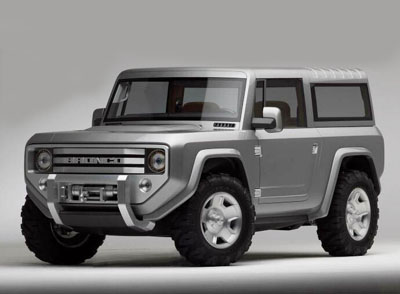
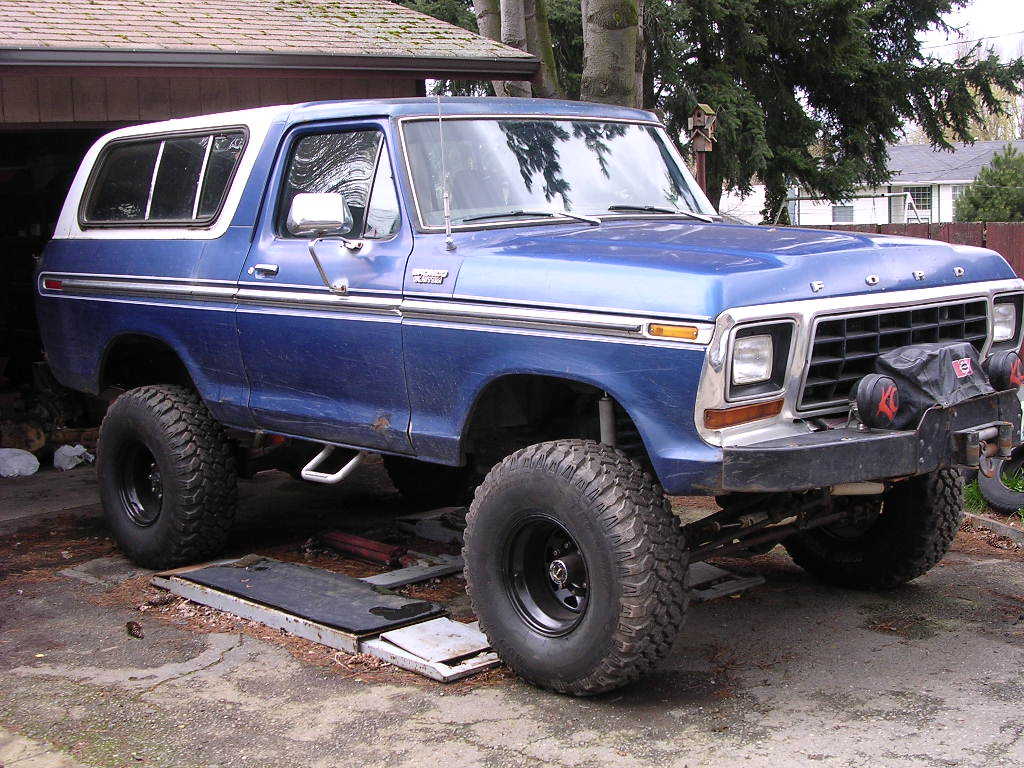
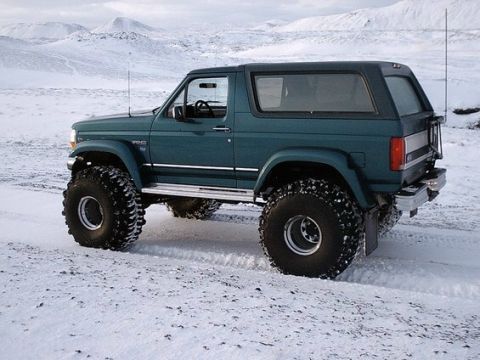
Ford Bronco Images

The Ford Bronco is a sport-utility vehicle that was produced from 1966 through 1996, with five distinct generations.

The Bronco was initially its own platform introduced as a competitor for small four-wheel-drive utility trucks such as the Jeep CJ-5 and International Harvester Scout. A major redesign based on a shortened Ford F-Series truck in 1978 brought a larger Bronco to compete with the similarly adapted Chevrolet Blazer. Thus, Broncos can generally be divided into two categories: Early Broncos (1966–1977), and full-size Broncos (1978–1996). However, no matter which year it was built, four wheel drive and low range were standard on every Bronco built through its thirty year run. Very few 2 wheel drive broncos were ever produced and almost all of those were made for sale outside of the United States.

Ford Broncoford bronco pictures
Ford Broncoford bronco
Ford Broncoford bronco pics
Ford Broncoford bronco images
Ford Broncoford bronco
Ford Broncoford bronco jim

Senin, 09 Agustus 2010

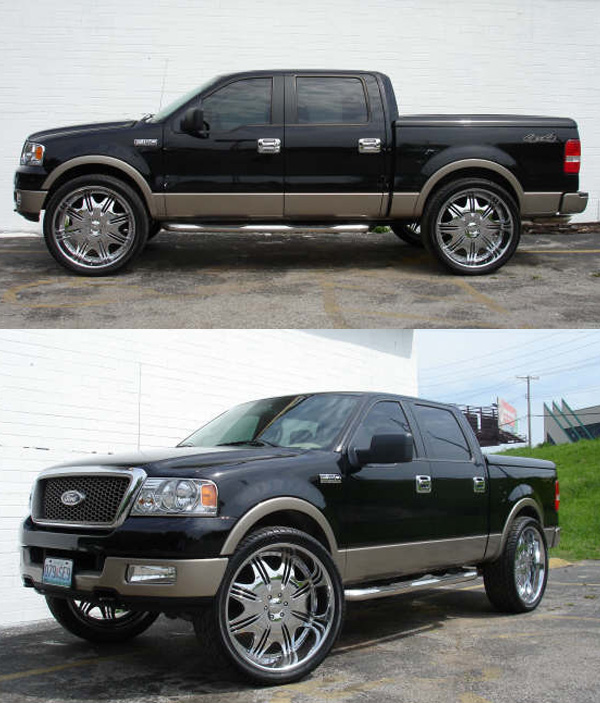
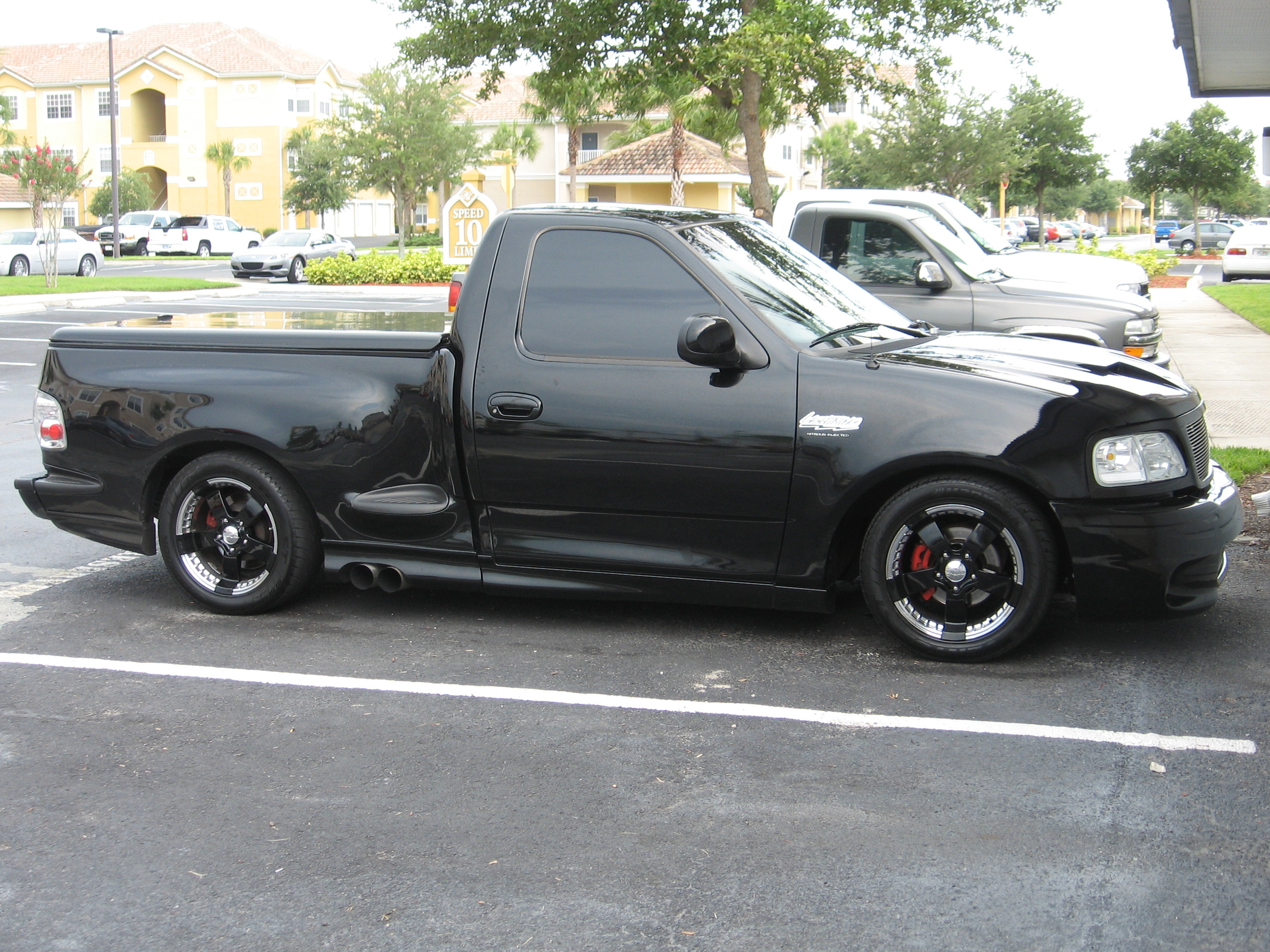
Ford F150 Wallpapers Reviews

The F-Series is a series of full-size pickup trucks from Ford Motor Company sold for over six decades. The most popular variant of the F-Series is the F-150. It was the best-selling vehicle in the United States for 24 years and has been the best-selling truck for 34 years, though this does not include combined sales of GM pickup trucks.Analysts estimate that the F-Series alone makes up half of the Ford Motor Company's profits in recent years[citation needed]. In the tenth generation of the F-series, the F-250HD and F-350 which were changed to diesel fuel changed body style in 1998 and joined the Super Duty series.

Ford F150Ford F150 Condo
Ford F150Ford F150 Lightning
Ford F150Ford F150 Gallery
Ford F150Ford F150
Ford F150Ford F150
Ford F150Ford F150 Review
Ford F150Ford F150 2009